
Click the logo above to return to home page
Blogx
Logistics, operations, tech, inventory optimization
Lines in the sand - a trace in time

In the late 1940s, Bernard Silver, a student at the Drexel Institute of Technology, overheard a question in a supermarket, addressed to its dean, about whether it was possible to create a solution to automatically read purchased items at the checkout counter.
Although the dean flatly refused the request, the subject tickled Silver's imagination. He shared his interest with his colleague Norman Joseph Woodland and together they began research.
They found inspiration in Morse code. On the beach, in the sand, Woodland drew dots and lines with his fingers, and from them, lowered thin and thick lines down - at that moment the idea for a system that transmits data was born. In October 1949, they filed a patent titled "Classifying Apparatus and Method," which included a linear and circular ("bull's-eye") design. Although they made a reader, the technique was not robust enough for use, the patent changes owners, and it took 25 years to reach a wide practical application.
The turning point occurred in the early seventies, when IBM founded the Supermarket Ad Hoc Committee with the task of developing a single standard - the Universal Product Code (UPC). Engineer George Laurer returned the original version with vertical lines and added a check digit. This is how the appearance of the barcode as we know it today was born.
On June 26, 1974, the first UPC barcode, on a package of Wrigley's chewing gum, was scanned at a Marsh Supermarket in Troy, Ohio. It was the moment when retail entered a new era.
Linear codes are of course already being replaced by 2D solutions like GS1 DataMatrix or GS1 QR Code, which can contain much more information - from origin to recycling tips. 3D codes have also been developed with the added dimension of providing data on the components used and other unique numbers.
What method of identification do you use for archives, equipment, devices, fixed assets?
Optimizing logistics is not a cost – it's your competitive advantage
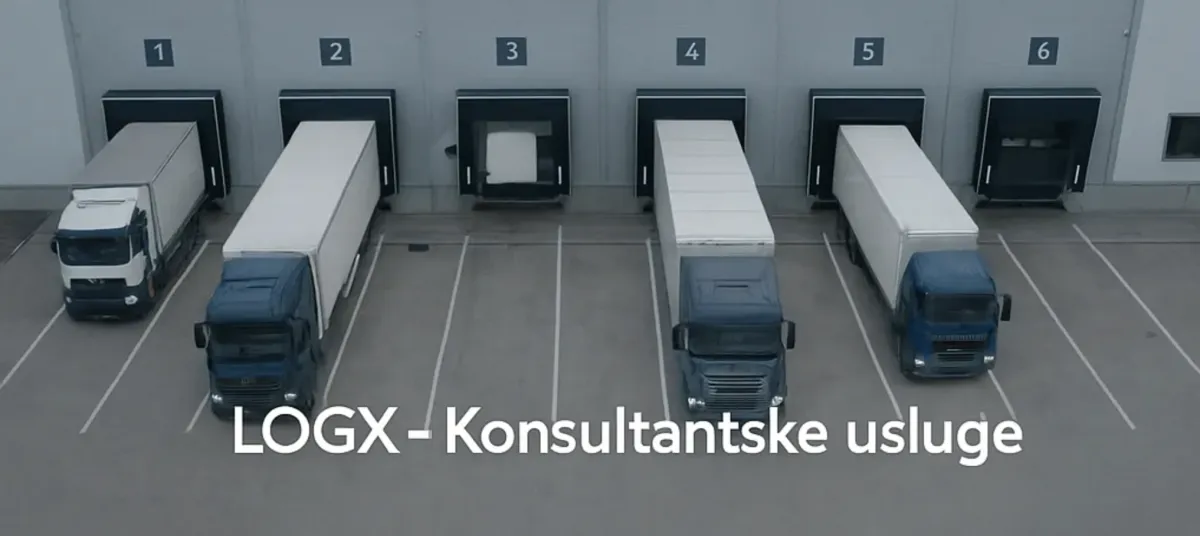
We are an independent consulting team with over twenty years of corporate experience in logistics and operations — hardened in industries where precision and reliability are not a choice, but the standard.
These blogs are written for you - distributors, manufacturers, operations managers - who know that problems are not solved by yet another software, but by understanding the system.
Here you can expect:
Practical tips for logistical efficiency
Case studies from our practice
Trends in supply chain management